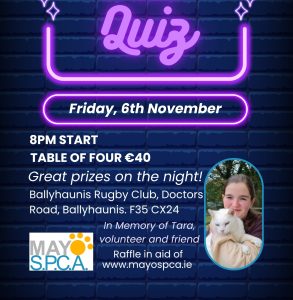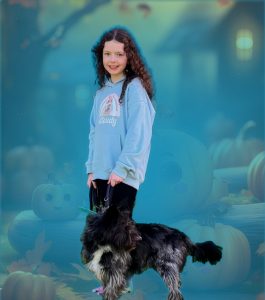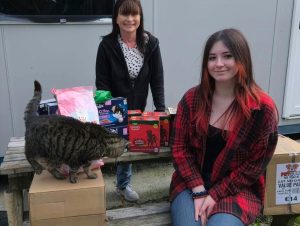
Four years ago everyone in the shelter was so happy to wave off Gracie to an amazing home with one of our wonderful volunteers, Tara. Gracie was a 2 year old cat with FIV and had waiting a long time, enjoying shelter life but so deserving of a loving home.


‘We believe there is a home for every animal ….. it’s just a matter of us finding them or them finding us! Sometimes it’s quick and sometimes it takes a long time.
Gracie has been with us for such a long time. She is only 2 years old but has FIV which meant she had to find a home where she would be kept indoors at all times – no exceptions.
Gracie is the most gorgeous, affectionate cat. She loves her cuddles and sitting on your knee and being brushed.
Well, today was Gracie’s lucky day. She has been adopted by two of our volunteers (Tara & John) and she will have the best life with them. They know her and love her just as she is.
This is an amazing day for all of us here @mayo_spca.
It’s days like this that make it all worthwhile 
Thank you Tara & John for giving Gracie a chance of a proper home and forever family
 (January, 2023)
…
Sadly Gracie passed away in December 2024 and Tara told us:
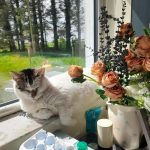
“Hi everyone, I just wanted to let ye know that unfortunately over the weekend, Gracie who we adopted from the shelter 2 years ago sadly passed away  she had cancer and with her FIV there was nothing else that could be done for her. She had a lovely 2 years with us and definitely ruled the roost in our home! She loved sunbathing at the windows, playing with her many toys and watching TV with us. She was very much cherished in our house and its unfortunate we didn’t get more time with her. Here are some photos of her time with us!”
she had cancer and with her FIV there was nothing else that could be done for her. She had a lovely 2 years with us and definitely ruled the roost in our home! She loved sunbathing at the windows, playing with her many toys and watching TV with us. She was very much cherished in our house and its unfortunate we didn’t get more time with her. Here are some photos of her time with us!”Tara, we are so sorry for your loss and so grateful and happy that you gave Gracie such a beautiful two years of love, care and happiness 



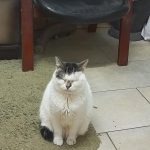
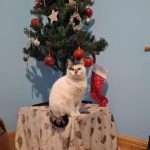
FIV:
FIV (Feline immunodeficiency virus) is a viral
infection that affects cats. It causes affected animals to have a weaker immune system in comparison to non-FIV positive cats. FIV initially results in a short- lived illness. Cats then enter a stage of progressive immune system decline but many remain without symptoms of the disease for many years. However if they do get sick they are less likely to fight off any infection.
Although FIV isn’t easily transmitted between cats
(only through deep bites) and is not spread by
sharing food and other normal interaction, the risk
means that a FIV positive cat should be adopted into a single cat household only.
As FIV can’t be transmitted to humans or other non
feline animals, an FIV positive cat is able to share his or her environment with a dog or other pet.
FIV is most commonly seen in unneutered male cats who have been involved in fighting for territory. It is spread by biting and body fluids and does not spread in the environment. This disease is one of the main reasons why we strongly recommend all cats are neutered at four months of age, as neutering can reduce a male cats urge to mate, roam and fight.